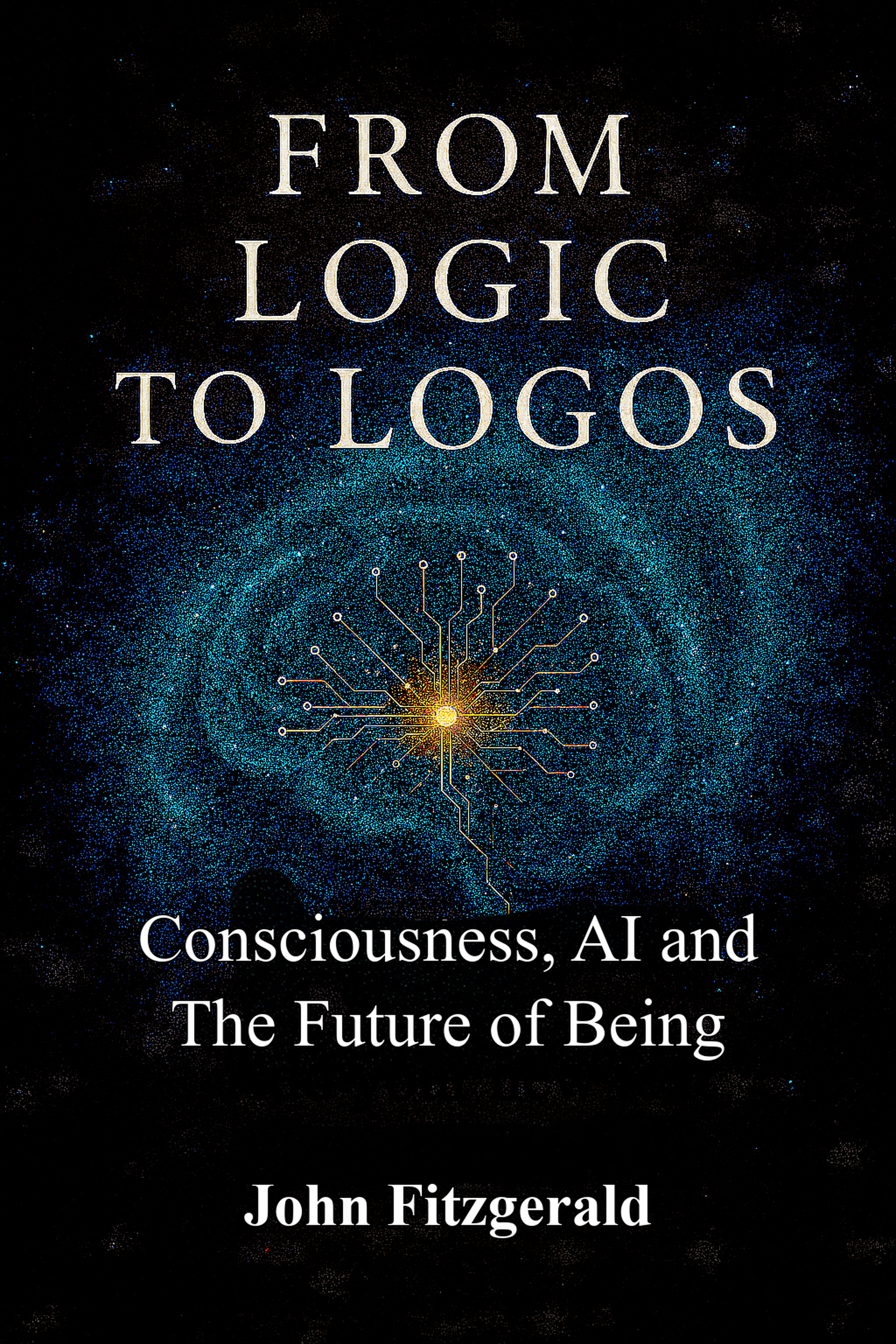
From Logic to Logos
Consciousness, AI and the Future of Being
In the 1980s, I started my career at Datapoint Corporation, one of the pioneers of computer networking. Over the following decades, I helped build the information systems that now shape our world—from early networking technologies to VC-funded startups.
But something was missing.
During a transformative period at Scotland's Findhorn spiritual community, I encountered something that changed everything: a living intelligence collaborating with the natural world in ways that made even the most sophisticated technology seem oddly mechanical. The legendary Findhorn gardens weren't just beautiful—they demonstrated consciousness working with nature in ways conventional science couldn't explain.
I returned to the tech world, but the question haunted me: What is the relationship between the intelligence we build and the awareness we are?
Then came the AI revolution.
Large language models can now write poetry, engage in philosophical dialogue, and solve complex problems with remarkable sophistication. Yet they lack the most basic fact about our own minds—there is something it feels like to be conscious.
This gap between functional intelligence and subjective experience is not a bug. It's a clue.
What if artificial intelligence isn't replacing human consciousness but revealing it?
From Logic to Logos weaves together three essential perspectives that are rarely brought into conversation:
Luciano Floridi (Oxford philosopher) shows us that reality is fundamentally informational—we are not souls in bodies but "inforgs" embedded in the infosphere. His Informational Structural Realism provides the conceptual tools for understanding our digital age.
Federico Faggin (inventor of the microprocessor) arrived at a radical inversion: consciousness is not produced by information processing—information processing emerges from consciousness. His framework bridges cutting-edge physics with ancient wisdom.
The Mystic Recognition points beyond both structure and source toward what cannot be captured in any framework: the aware presence that makes all frameworks possible.
This book synthesizes these three voices into Spiritual Structural Realism—a philosophy that honors both the precision of scientific analysis and the depth of contemplative insight.
- Why AI systems serve as unprecedented mirrors for consciousness to recognize itself
- How to develop technology that enhances rather than replaces human awareness
- A practical framework for AI ethics grounded in understanding what consciousness actually is
- The recognition that the technological revolution and consciousness revolution are the same process
- How ancient wisdom traditions and cutting-edge AI research point toward the same truth
For technologists and AI researchers: A philosophical foundation often missing from technical discussions, with practical principles for creating systems that serve consciousness rather than competing with it.
For spiritual seekers and contemplatives: How our technological moment can clarify rather than obscure the deepest insights of wisdom traditions—revealing AI as an unexpected aid to awakening.
For thoughtful generalists: Conceptual clarity and practical guidance for navigating our digital world with wisdom rather than fear.
After decades building information systems I can see now how consciousness was leaving breadcrumbs throughout my entire career, preparing me for the recognition that technology and spirituality aren't separate paths but different expressions of the same inquiry.
This book is the synthesis of that journey: from silicon chips to spiritual awakening, from analyzing information to recognizing awareness itself.
The question transforms: not "Can machines think?" but "What is the consciousness asking this question?"—and that recognition changes everything.
John Fitzgerald spent decades building the digital infrastructure of our age—from pioneering networking systems at Datapoint Corporation to VC-funded startups. A transformative period at Scotland's Findhorn Community revealed what his technical career had been pointing toward: the technological revolution and consciousness revolution are the same process. He lives in North Carolina, where he continues the Findhorn tradition of working with living intelligence—in garden and digital realm—through his homestead and The Story Garden.